The Hudson Road Chronicles

From cul-de-sac to 30 acres — ticks, tractors, and a 100-year-old farmhouse

  • Three Nights In: Sparks in the Septic

    The plumber’s camera was supposed to show us a clog. Instead it showed us sparks.

    Not metaphorical sparks. Actual, literal, arcing electricity, inside the sewage line, live on the plumber’s monitor. It is not the kind of thing anyone expects to see coming out of a drain line, and it is not the kind of thing anyone wants to see twice.

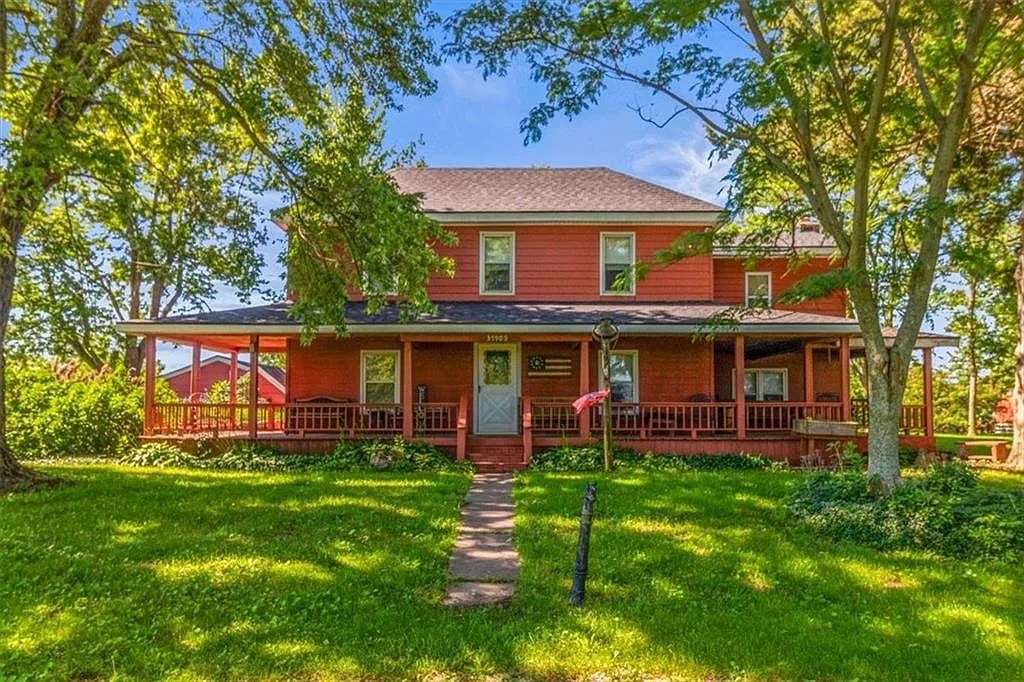
    Tony and Nola have now spent three nights in the farmhouse. Here’s how the first few days went, in roughly the order they tried to humble everyone involved.

    The carpet had to go

    This was not on the schedule. Nola and Julee started it, operating on the time-honored principle of forgiveness over permission. (They have since been forgiven.) From there, Nola, Julee, and Tony all got pulled in, and the first-floor carpet came up completely. Then came the part nobody puts in the home-improvement montage: vacuuming, pulling every tack strip, and picking staples out of the hardwood one at a time.

    Next, a rented floor buffer took on what was underneath, which was many, many years of built-up dirt. If you’re ever considering pulling carpet in an old house, a few things worth passing along: tack strips are nastier than they look (gloves, always), the staples take far longer than the carpet itself, and the buffer is where you find out what color your floor actually is. The wood was worth the effort. It was also not a decision anyone got to make leisurely, which is a recurring theme.

    The movers meet a 115-year-old house

    Tony and Nola hired movers, and credit where it’s due: they earned their money. A century-plus-old farmhouse was not built with a sectional sofa in mind. The crew ran into narrow doorways, loose front porch steps, and uneven ground between the truck and the door, all while carrying some very heavy things. Everything made it in. Nothing and no one went through the porch. Tony and Nola are calling that a win and not looking too closely at those steps until they’ve been fixed.

    If you’re moving into an older home, walk the path from the truck to every door beforehand, measure the doorways for your biggest pieces, and check the steps. Tony and Nola did the second and third of those in their heads, which, as it turns out, is not the same thing.

    The slow drain that wasn’t

    You expect a 115-year-old farmhouse to be a little wonky. This one is pushing them.

    A plumber came out and replaced a toilet. That didn’t fully fix a slow drain, so he snaked the line, and then sent a camera down the pipe to see what was going on. That’s when the camera started arcing. Sparks, in the sewage and septic line, which is a sentence nobody expected to write and everybody would like to stop writing.

    The plumber, wisely, packed up and left it to an electrician. The electrician shut off several breakers and will be back next week with a more experienced colleague. For now there’s no power in Tony’s office, the downstairs bathroom, or much of the upstairs. Yes, the office. The man with the homelab has been separated from his rack. Character building, apparently.

    I’m not going to guess at what’s going on in the walls and the ground, because I’m not an electrician and this is exactly the kind of thing where guessing is a bad plan. The plain-English lesson: electricity showing up somewhere it has no business being is a stop-everything situation, and keeping the breakers off until someone who knows better has a look is the right call, inconvenient as it is. More to come once the electricians have weighed in.

    The one thing that went smoothly

    The stove also had to be replaced, which we knew before we moved in. It got done, and it was completely uneventful. That deserves acknowledgment, because after the last few days, “uneventful” deserves its own paragraph.

    The porch lives up to the hype
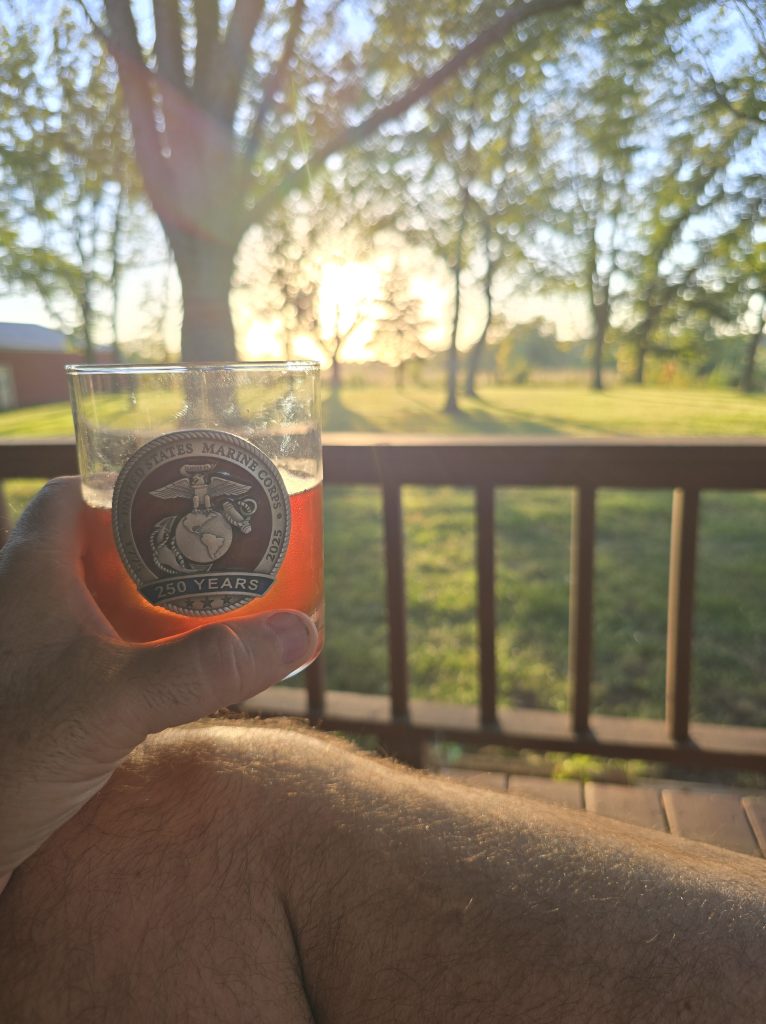
    A drink on the farmhouse porch at sunset

    Here’s the one thing that did exactly what the listing promised: the porch, and the sunsets from it. Our evenings out there are numbered, since it’s Fall in Missouri, but this week is bringing record highs, so we may have more than we thought. We intend to use every one of them.

    Tomorrow there will be more to fix. Tonight, there’s a porch.

  • Possession Is Nine-Tenths of the Law (The Other Tenth Is Wi-Fi)

    Somewhere in the first ten minutes of owning 30 acres, Julee disappeared down into the root cellar. Nola went right in after her.

    I’d like to say I was shocked. I wasn’t. That’s the whole dynamic in one sentence: one person walks toward the dark hole in the ground like it’s a walk-in pantry, and another person, who a year ago had never seen a root cellar outside of a Little House on the Prairie rerun, follows her without a second of visible doubt. Nola’s policy on rural life is simple: wherever Julee goes, she goes.

    Last night we formally took possession. Julee, Nola, and I (plus Julee’s two dogs, who treated the whole property like a personal invitation) drove out to walk the place as owners for the first time instead of as people who were merely allowed to look. Julee, of course, checked out the root cellar and then the barn. Nola, of course, followed. The dogs supervised.

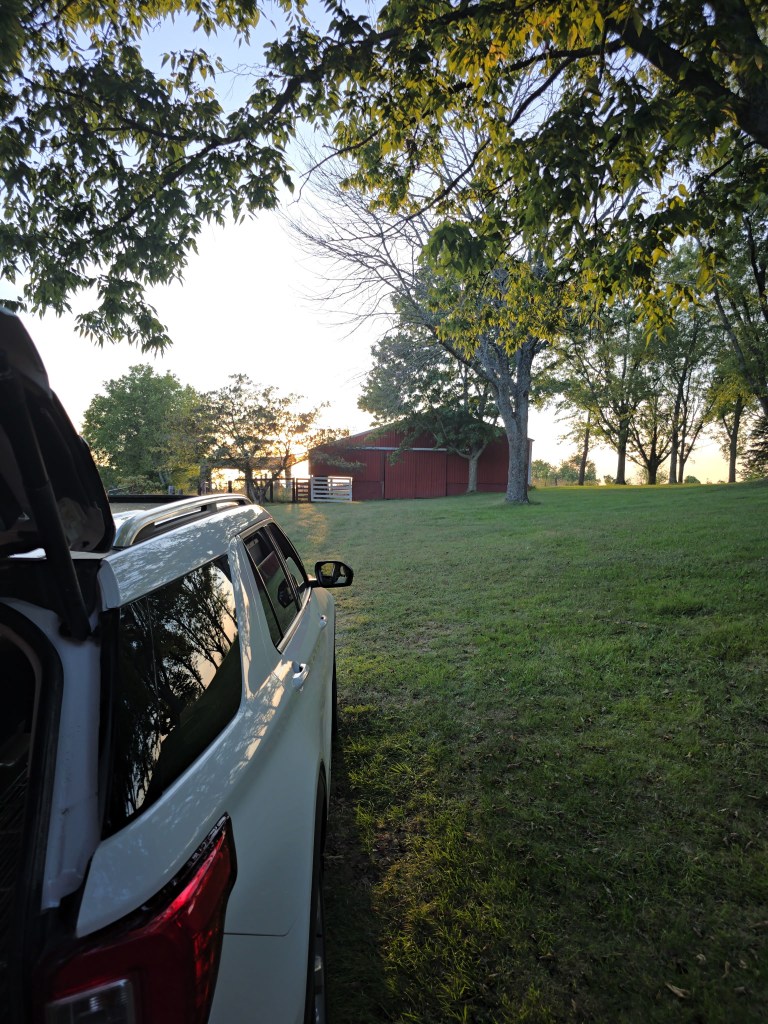
    The red barn at sunset, seen from under a big tree beside a parked white SUV

    Everything was about what we expected, which after months of paperwork is its own kind of miracle. Nothing collapsed. Nothing was on fire. The barn is still red, the trees are still enormous, and the yard is still the kind of green you only get when nobody has been rushing it.

    The Porch

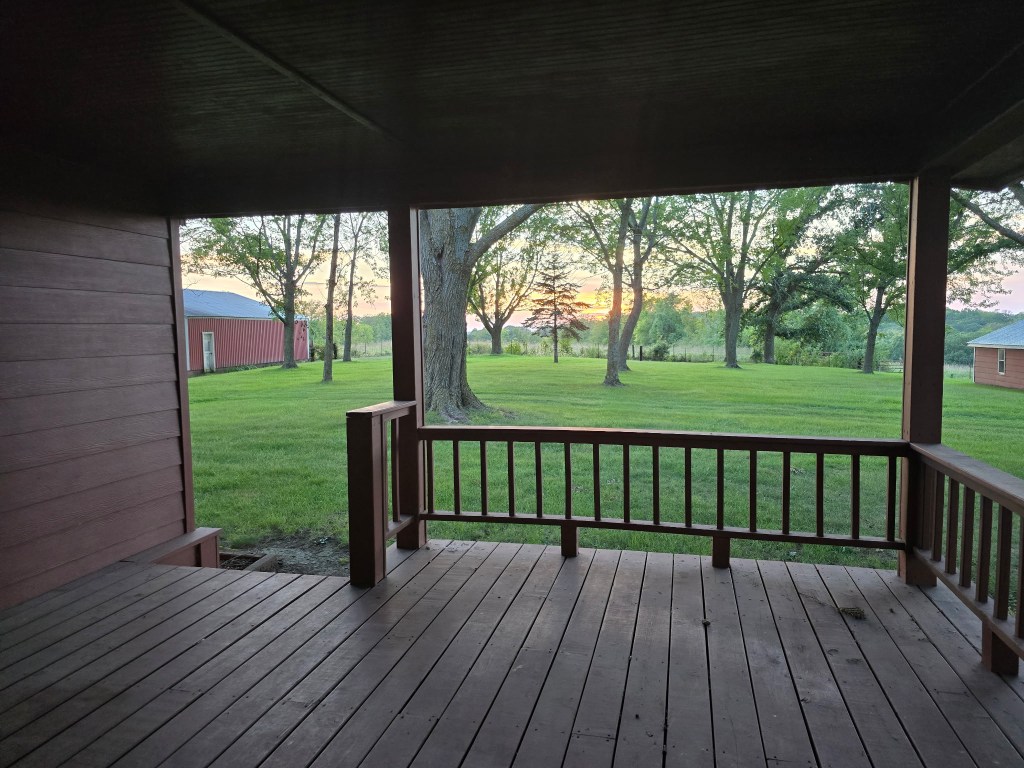
    Here is the part I keep coming back to. The covered porch on the old house faces west, out across the lawn toward the barn and a line of big trees, and around sunset the whole thing lights up. I stood there long enough to know exactly what I want the next few years to look like: a glass of bourbon, a porch rail to prop my feet on, and absolutely nowhere to be.

    Sunset through the trees, viewed from the covered porch of the old farmhouse with the red barn at left

    I did not have the bourbon last night. I want that on the record. But I’ve picked out the spot.

    The Thing Nobody Warned Us About

    Nobody told us how hard it would be to get internet out here.

    This is a bigger deal than it sounds, because all of us work from home. Internet isn’t a nice-to-have on Hudson Road, it’s the thing that pays for the bourbon. And out here, the options you take for granted in a suburb (pick a provider, pick a speed, someone shows up Thursday) mostly turn into a shorter and less exciting list.

    Our best option is Starlink. If you haven’t run into it, the short version is that a small dish on your property talks to satellites overhead instead of to a cable in the ground. No trenching, no waiting on someone to extend a line to your road. The catch is the one word that defines this property: trees.

    Starlink works best when the dish has a wide, clear view of the sky. Satellites are constantly moving, so even a branch or two in the wrong spot can cause brief dropouts, and brief dropouts are exactly what you notice on a video call. Our property is full of mature trees, which is wonderful for shade and sunsets and less wonderful for satellites. The dish’s app has an obstruction checker that shows you what’s blocking the view from a given spot, so the plan is to test a few locations before committing to any of them. Mounting it higher, on a pole or a roofline, is the usual fix, and selective trimming is the fallback. We’re not going to start swinging a chainsaw at the trees that made us fall for the place.

    I’ll admit something else: I’m kind of looking forward to this. The homelab part of my brain sees “find the one spot on 30 acres with a clean view of the sky” and lights up like it’s a puzzle box. Whether that enthusiasm survives the first dropped video call with four people depending on it, we’ll find out. I’ll report back.

    What’s Next

    Now the real work starts. We own it, which means we get to find out what we actually own: what the house needs, what the barn is hiding, what’s down that cellar besides Julee. There will be a post about all of it, and at least one about the internet, because I’m not going to be able to leave that alone.

    For now, the sun is up, the coffee is on, and the bourbon is patiently waiting for me to earn it.


  • The Bonus… Building?

    We hadn’t even started moving yet. This was the “let’s drive out and just look at the thing we now legally own” trip — the kind where you bring nothing but a Jeep, some beers, and zero tetanus boosters.

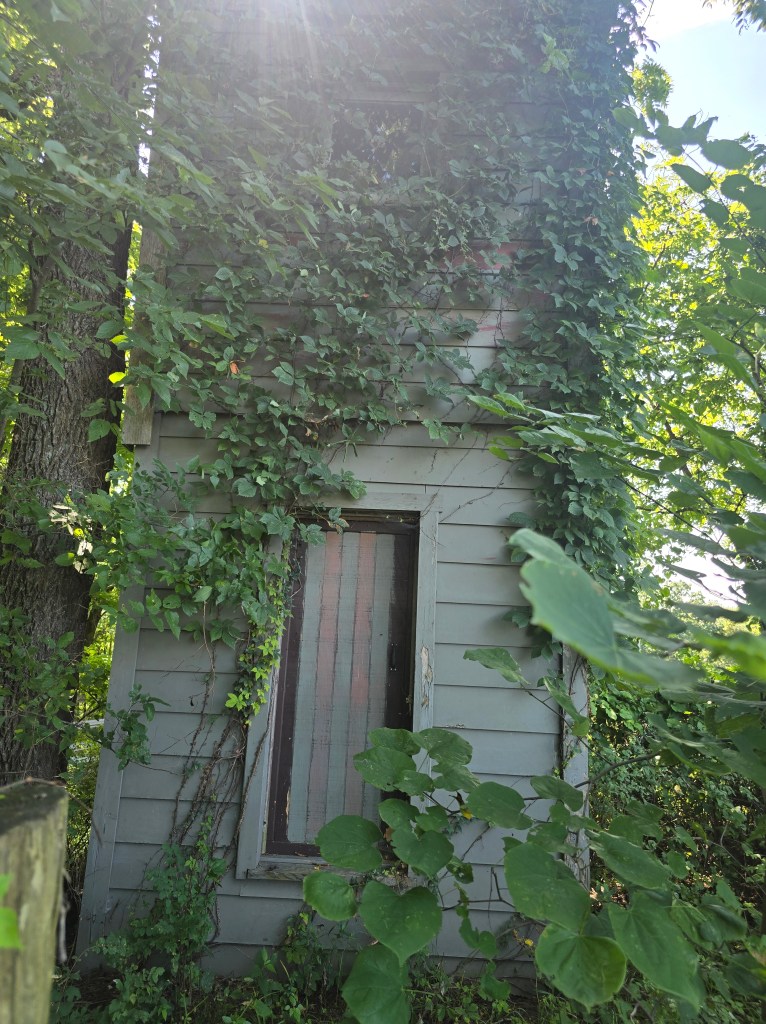
    That’s when we saw it: a two-story wooden structure, standing bolt upright in the tree line, absolutely mummified in vines. Not falling down. Not leaning dramatically for effect. Just… standing there, fully reclaimed by the forest, like the woods had slowly built a green shell around it and forgotten to tell anyone.

    Nobody had mentioned this structure existed. It was not on the listing. It was not on our radar. And yet there it was, two stories tall, daring us to go find out what it was.

    Julee did not hesitate for even one second.

    “Yeah, I’ll go in there. I’m not scared.”

    — Julee

    And that was that. She found the door, found the stairs, and was on the second floor before Lance and I had finished formulating our first “hang on, let’s think about this” sentence. Nola went right in behind her, because if Julee’s already up there, apparently the structural integrity question has been resolved to her satisfaction.

    Lance and I stayed in the Jeep.

    I want to be clear that this was a strategic decision. Someone needed to keep the engine running in case of collapse, or snakes, or whatever the two-story vine tower had been quietly incubating for the last few decades. Lance and I had a whole unspoken plan: if the floor gave way, we’d be the extraction team. If a zombie horde came pouring out of the windows, we’d be the ones providing covering fire from a safe distance. Very important jobs, both of them.

    They came out fine. Worst casualty of the entire expedition was a spiderweb in the face.

    On our way out, we ran into the woman who’d sold us the property and still lives there. We described what we’d found, still slightly dazed, and asked what exactly we’d just crawled through.

    “Oh, that’s the treehouse,” she said. “My boys built it.”

    We pushed back on this. Gently. Because “treehouse” implies a floor, maybe a rope ladder, something a nine-year-old assembled in an afternoon. This thing had two full stories and had apparently been standing long enough for the forest to grow a second skin over it.

    She laughed and admitted the truth: her husband built most of it, and it had taken long enough, and gotten ambitious enough, that she and the neighbors spent a solid stretch of time quietly wondering if the man had lost his mind.

    So. Not really a treehouse. More like one guy’s multi-year woodworking fugue state that briefly worried the neighborhood.

    We have not decided what it becomes yet. Current leading candidates are mother-in-law quarters, or — if it comes to that — a fully committed sniper tower for the eventual zombie horde. Given that it’s already got the height, the camouflage, and Julee’s seal of approval, we’re honestly ahead of schedule on that second option.


  • The Tap That Almost Wasn’t There

    Photo by Gowtham AGM on Unsplash

    We’d already done the math a dozen times. Three lots — two of us building new, and the century-old farmhouse lot going to the other two co-purchasers, who are planning to remodel it into their place. It was a clean plan. We knew water service existed near the property; we’re not that remote. What we hadn’t confirmed was whether the district could actually support the connections we needed.

    The farmhouse lot already had its infrastructure sorted — no issue there. It was the two new-build lots that needed fresh connections from the district, and that’s where things got tense.

    Older pipes, newer math

    Here’s the part that isn’t unique to us, and is probably worth knowing if you’re eyeing anything like this: a lot of rural water infrastructure out here was built for a different era — when a section of land supported one farmhouse, not multiple new households. Our stretch of Hudson Road used to be a handful of 30-40 acre farms. Now those same tracts are getting split up, and every new subdivision means more taps pulling from a system that was never sized for this many connections per mile. The supply didn’t change. The demand did.

    Nobody’s district engineer is out there proactively upgrading capacity ahead of that trend. You find out where you stand by calling and asking directly — connection by connection, not just “is there water in the area.”

    Making the calls

    When we called, there was exactly one additional tap available. We reserved it on the spot for $4,000 — first-come, first-served, and reservations aren’t free. That covered one of our two new-build lots. The other one needed the district to commission an actual capacity study, at a cost of $1,500, to confirm they could support a second additional connection at all.

    That study wasn’t a formality — it was a real “we don’t know the answer yet” moment. We paid, then waited.

    It came back positive. We reserved the second tap for another $4,000, same process. And just like that, both new-build lots had a real, confirmed path to water — not an assumption, an actual reservation with the district’s name on it. All in, $9,500 to go from “we think there’s water” to “we have two guaranteed connections.”

    Why this almost broke the plan

    If that second study had come back negative, we had a fallback — but it wasn’t one anyone was excited about. Plan B was drilling a well on one of the new lots. Not ideal. Not what any of the four of us wanted, for cost, maintenance, and honestly just peace of mind reasons. We looked into it seriously enough to know it was possible, and hoped hard we wouldn’t need it.

    The actual lesson

    If you’re looking at rural land with plans to add new connections, treat water as two separate questions, not one:

    • Is there water service near this property?
    • Can the district actually support the number of new connections your plan requires?

    Get an answer to #2 in writing, directly from the utility, before you commit to your lot count or your financing. It’s not glamorous. It’s also one of maybe three or four things that could have quietly complicated this entire project before we ever broke ground.


  • The Property Before the Property

    We sat down with a printout of the plat and a pencil, trying to figure out where three property lines could go. It should have been the easy part — draw three rectangles, roughly equal, done. Instead we kept running into the same problem no matter how we turned it: every version of the lines either sliced straight through the existing septic system, or worked around it in a way that left one of the three lots oddly shaped, oddly small, or oddly positioned relative to the house. We must have redrawn it a dozen times. It never got easier.

    This was before Hudson Road. Before we’d even heard of Hudson Road. There was another property — different acreage, different county road, a house already on it — that we were far enough into that we’d paid for a home inspection and a septic inspection. A few hundred dollars in cash, all told. The bigger cost was the time: research, site visits, conversations, the slow accumulation of “okay, if we do it this way” plans that never quite got finished before we started on the next version.

    The county, as far as we could tell, would probably have let us subdivide it. That was never really the obstacle. The obstacle was that nothing we drew made sense once the septic system was sitting in the middle of it, refusing to move. We could get three legal lots. We could not get three lots any of us actually wanted to own.

    Here’s what I’d tell anyone starting down this road now: we had a property, we had money moving, we had inspectors on site — and we still didn’t have a vision. Not really. We hadn’t sat down and proven to ourselves that the lines could actually work before we started paying people to tell us about the house. The inspections should have come after we knew the subdivision worked, not before. We had the enthusiasm backwards.

    So we walked away. No drama, no big blowup — just four people looking at the same unworkable map and agreeing, one by one, that this wasn’t it.

    We kept looking. That’s how we eventually found thirty acres on Hudson Road — and the next time, we drew the lines first.


  • Welcome to Hudson Road

    Four suburbanites just bought thirty acres in Jackson County, Missouri, and we have no idea what we’re doing.

    That’s not false modesty. Between the four of us, we’ve got IT, Project Management, a CPA and exactly one who actually knows what she’s doing with plants and animals. What we don’t have is any real experience subdividing land, permitting anything, or living with a hundred-year-old farmhouse — built before any of our parents were born.

    We’re doing it anyway.

    This is where we’ll document that: the paperwork, the costs nobody warns you about, the culture shock, the build, and whatever the four of us learn about doing this together instead of alone. Some of it will be useful if you’re thinking about a similar move. Some of it will just be funny, because four people who’ve never done this before are going to get things wrong in interesting ways.

    We’ve already started — the land is bought, the planning has begun, and there’s already a lot to catch up on. But this is the beginning of the record, for us as much as for anyone reading along.

    It should be an adventure. Let’s find out.